Salaries, Snacks & Spreadsheets: Welcome to HR Budget Season
Today, we’re diving into the four essential questions every HR professional must understand when it comes to budgeting: When is the budget created? Who is responsible? What are the key components? And how is the entire process carried out?
Let’s break it down and make HR budgeting clear, strategic, and actionable.
When is the HR Budget Made?
HR budgets are typically created annually, about 3–6 months before the fiscal year starts. For example, if your fiscal year begins in January, planning kicks off around July to September. Some companies also do mid-year revisions based on market shifts or internal changes.
Who Makes the HR Budget?
The HR Manager or Director usually leads the process — but it’s a team effort.
Finance teams help align costs with the company budget.
Department heads provide insights on manpower and training needs.
Leadership (CEO/CFO/COO) gives the final approval to ensure alignment with business strategy.
What Are the Key Components?
A solid HR budget includes:
Salaries & Wages – Base pay, bonuses, new hire salaries
Benefits – Insurance, retirement, wellness perks
Recruitment Costs – Hiring ads, agency fees, onboarding
Training & Development – Courses, workshops, certifications
Employee Engagement – Recognition programs, team events
HR Tech Tools – HRMS, payroll systems, compliance tools
Legal & Compliance – Audits, consultations, policy updates
Contingency Funds – For unplanned HR expenses
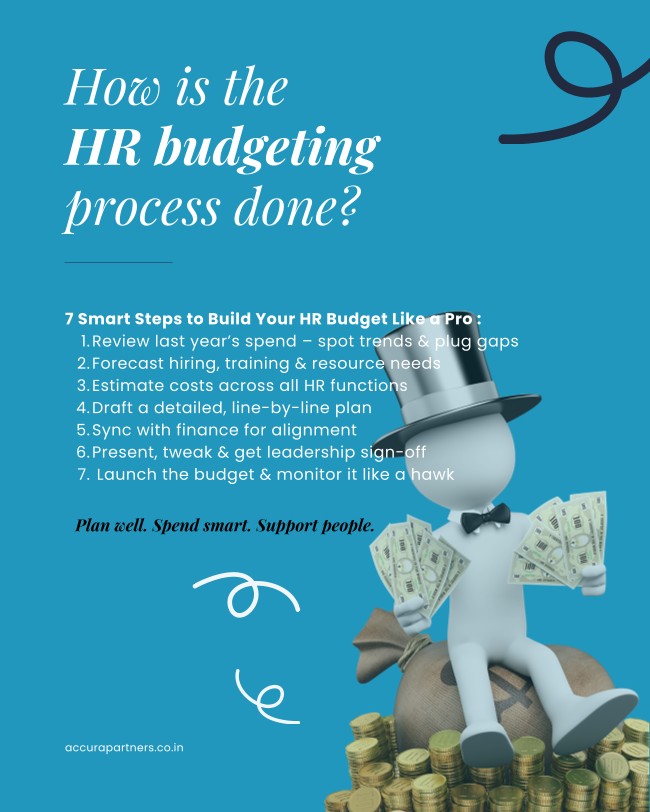
How Is the Budgeting Process Done?
> Review last year’s spending for trends and gaps
> Forecast hiring, training, and HR needs
> Estimate costs for all activities
> Draft a detailed, line-by-line budget
> Align with Finance for financial feasibility
>Present & Refine with leadership input
> Implement & Monitor spending throughout the year
In short: An effective HR budget turns people planning into a powerful business strategy — making sure every dollar supports your team and your goals.